








• Български
  • English
  • Deutsch
  • Русский
   +359 56 55 55 88
KOSTENLOSES TEL.: 0800 11 881
НЕФРОНЪТ – ФУНКЦИОНАЛНАТА ЕДИНИЦА НА БЪБРЕКА

THE NEPHRON – THE FUNCTIONAL UNIT OF THE KIDNEY

The nephron, the functional unit of the kidneys, is responsible for removing waste from the body. Each kidney is made up of over one million nephrons, which intersperse the renal cortex, giving it a granular appearance.

It is a microscopic tubular formation that consists of a renal (Malpighian) body and a curved tubule. The Malpighian body itself consists of a capillary ball called a glomerulus and the enveloping capsule, also called a Baumann capsule.

There are three main processes in the nephron: filtration, back-suction, and secretion. These processes are extremely important for maintaining the internal fluid environment and the alkaline-acid balance in the body. During glomerular filtration, water and particles dissolved in it and leave the vascular system. After that they enter the space between the two leaves of the Bauman capsule and from there into the lumen of the renal tubules, while filtration takes place only in the glomeruli.

There are two types of nephrons:

  • cortical (their glomeruli are located in the outer 2/3 of the cortex, their loops are short and reach the outer medulla) and
  • juxtamedullary (their glomeruli are located in the inner 1/3 of the cortex, their loops are long and reach the inner medulla – to the renal papillae).

Within a day, a large amount of blood passes through the kidneys, from which 170 liters of primary urine are excreted. This filtrate, passing successively through the other structures of the nephron than undergoes resorption of water and ions, as the amount of final urine is reaching an average of 1200 ml. per day.


КАКВО ПРЕДСТАВЛЯВА БЪБРЕЧНАТА АРТЕРИЯ?

WHAT IS THE KIDNEY ARTERY?

There are two blood vessels leading from the abdominal aorta to the kidneys. The renal artery is one of these two blood vessels. The renal artery enters through the hilus, which is situated where the kidney curves inward into the concave shape. The renal artery and the renal vein pass through this hilus. The flow of oxygen-enriched blood passes through the renal artery, which the heart pumps to the kidneys in order to be filtered. After that process is finished already filtered blood is delivered back to the heart by the kidneys.

Under normal circumstances, once the renal artery enters through the hilus, it divides into two main branches, which then divide into a number of smaller arteries that supply blood to different areas of the kidney known as nephrons. The main structural and functional unit of the kidney is the nephron. The total number of nephrons in both kidneys is about 1-2 million. A normal person’s kidneys receive approximately a quarter of the heart’s blood, or 1.2 liters of blood, every minute. The body has self-regulating mechanisms that increase or decrease blood flow to adapt to stress. Receptors located in the smooth muscle wall of the renal artery allow the arteries to dilate or contract in order to compensate for the high or low blood pressure.

Due to its vital function, which includes constant contact with toxins, the kidneys are prone to a variety of problems.

ВИТАМИН C И ДИАЛИЗА

VITAMIN C AND DIALYSIS

As one of the most important water-soluble non-enzymatic antioxidants, vitamin C consists of ascorbic acid and its oxidized form, dehydroascorbic acid. Vitamin C has a wide range of metabolic functions and significantly enhances cellular immunity. One of its best benefits is its ability to increase iron absorption, thus preventing problems such as iron deficiency anemia.

Compared to the general population, plasma vitamin C levels range from 30 to 60 μmol / L. Plasma levels of vitamin C in patients on hemodialysis are usually lower than in the general population, which is mainly associated with increased inflammation, anemia, oxidative stress and secondary hyperparathyroidism. Because it is excreted by the kidneys, intake above 100-200 mg / day should be restricted in patients with CKD in order to avoid oxalosis, which is an accumulation of a metabolic by-product of ascorbic acid. Many organs and tissues of the body can be affected by oxalate deposits, including the kidneys.

The supplement of vitamin C is provided by potassium-rich foods such as citrus fruits, orange juice, strawberries and broccoli, commonly limited to hemodialysis patients for whom it is important to follow a potassium-restricted diet. Loss of this vitamin is also possible during dialysis, as about a few hundred mg of it can be removed in one dialysis treatment.

НАРУШЕНИЯ НА СЪНЯ ПРИ ПАЦИЕНТИ НА ДИАЛИЗА

SLEEP DISORDERS IN DIALYSIS PATIENTS

Sleep disorders are extremely common among dialysis patients. The most commonly reported complaints are excessive daytime sleepiness, sleep apnea syndrome, restless legs syndrome, snoring and intermittent limb movement disorders. Clinical studies have found that sleep apnea syndrome (SAS), restless legs syndrome (RLS) and recurrent limb movement disorder (RLMD) are much more common in dialysis patients than among the general population. Undoubtedly, these sleep problems have a significant negative impact on quality of life, as they are often mentioned as the main sources of stress.

Sleep apnea is a chronic disease that is a repeated respiratory arrest during sleep, the consequences of which is low level of oxygen in the blood. Conducted researches show that sleep apnea may lead to increased levels of cardiovascular events and to the accelerated development of atherosclerosis in patients with chronic kidney disease.

In Bulgaria, no specific studies have been conducted based on the problem of sleep disorders in patients with CKD. However, global research has shown that problems with these disorders occupy a significant part in systemic history of patients with CKD.

НОВИ МАШИНИ ЗА ХЕМОДИАФИЛТРАЦИЯ ЩЕ БЪДАТ ДОСТАВЕНИ В ДИАЛИЗЕН ЦЕНТЪР „НЕФРОЛАЙФ“ДО ДНИ

HEMODIAFILTRATION MACHINES OF THE HIGHEST CLASS WILL BE AVAILABLE WITHIN A FEW DAYS IN “NEPHROLIFE” DIALYSIS CENTER

Dialysis Center “NephroLife” have always strived to provide quality dialysis treatment and impeccable medical care.
We are introducing hemodiafiltration as part of the medical practices applied in our center and so we will cover all possible aspects of dialysis treatment according to the needs of the patients.

For all patients who need hemodiafiltration, the clinic will provide brand new Fresenius 5008S machines from the end of October.
As always, NephroLife provides to the patients new and high-quality equipment and consumables for dialysis treatment from FRESENIUS Germany, with proven reliability and efficiency.

The desire to improve the quality of life of hemodialysis patients leads to the development of methods for extrarenal blood purification.

However, the application of this method is strictly individual to each patient and is prescribed after consultation with a nephrologist.

NephroLife specialised team of doctors, nurses and world-known consultants with vast experience in dialysis treatment are working together to deliver the best patient care according to all international standards of medical practice.

All patients and their families are more than welcomed to explore the clinic and the facilities they provide.
For more information, consultations and starting treatment in NephroLife Dialysis Center, you are welcomed to visit the clinic (behind MALL Plaza), or call: 056555588; 0879084777

Ambassador of the State of Israel Yoram Elron

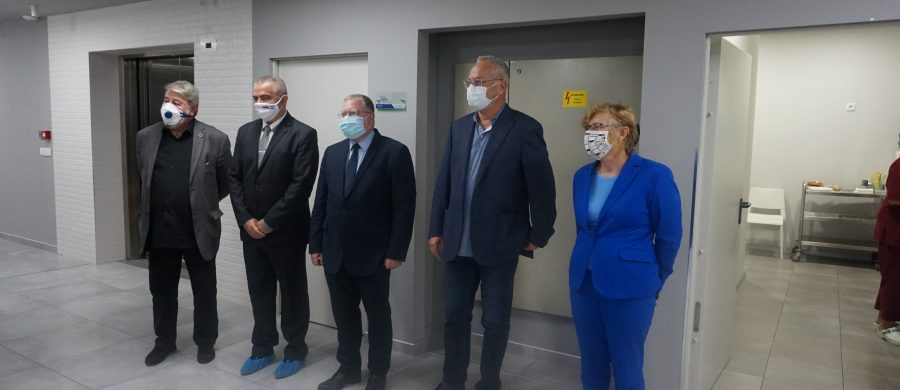
AMBASSADOR OF THE STATE OF ISRAEL YORAM ELRON VISITED NEPHROLIFE DIALYSIS CENTER – THE LARGEST ISRAELI INVESTMENT IN BURGAS REGION

On October 13th, during his first visit to Burgas, the Ambassador Elron get acquainted with the medical practices applied in the first dialysis center in Bulgaria, introducing Israeli know-how in the sphere of dialysis. He was accompanied by Yordanka Ananieva (Deputy Mayor of the cit5y of Burgas), Dr. Loris Manuelyan(“Municipal Doctor” of Burgas region) and Orlin Mandov – Honorary Consul of Israel in Bulgaria. They were welcomed by the medical team of the clinic and Mr. Ran Fuchs – the investor and owner of the dialysis center.

Mr. Ran Fuchs introduced to the guests the medical equipment and the high medical standard applied in dialysis treatment at NephroLife and also added:

“NephroLife is the first dialysis center in Bulgaria to introduce the high-tech practices already applied in Israel in the sphere of dialysis and high-quality equipment and consumables of the global company Fresenius – Germany, specializing in life-saving technologies for infusion, transfusion and clinical nutrition. Leading news from our clinic is that from the end of October, for all patients who need hemodiafiltration, the clinic will provide brand new Fresenius 5008S machines. By adding hemodiafiltration as part of the medical practices applied in our center, we will cover all possible aspects of dialysis treatment”.

We also provide to our patients the opportunity to consult with world-renowned specialist prof. Thalia Weinstein with extensive experience in the field of Nephrology and Dialysis treatment. The clinic maintain a high medical standard and we are always up to date with the latest trends and practices applied in sphere of dialysis “.

In front of the journalists the Ambassador Yoram Elron specified the areas for future Israeli investments in Burgas emphasizing that medicine still remains one of the most important.
“The biggest Israeli investment in Burgas is in the field of medicine. The investors built the dialysis center NephroLife with the assistance of the Municipality of Burgas. I hope the Israeli investments in the region to be increased in all areas, but especially in medicine, which is the purpose of my visit here “said the Ambassador.

УРЕМИЯ

UREMIA

Uremia is a clinical syndrome characterized by elevated blood urea levels. It is based on metabolic abnormalities, fluid imbalance, electrolytes and hormones associated with the deterioration of renal function.
Uremia is more common in patients with chronic kidney disease (CKD), especially in the later stages of CKD or in acute kidney damage if the loss of kidney function is rapid. Urea itself has both direct and indirect toxic effects on a number of tissues.

Urea is synthesized in the liver and is the end product of protein metabolism. It is transmitted from the liver through the blood to the kidneys, where it is excreted in the urine. However, when kidney function is impaired, waste products and toxins such as creatinine and urea accumulate in the blood and cannot be effectively filtered and removed. If uremia is left untreated, this condition is life-threatening.

Symptoms:

Tingling and numbness of the hands and feet – neuropathy

General fatigue and low energy

Nausea, vomiting and loss of appetite

High blood pressure

Swelling of the ankles

Dry skin and itching

More frequent urination

Chronic kidney disease and factors leading to kidney failure and uremia are:

Congenital anomalies of the kidneys

Polycystic kidneys

Diabetic nephropathy

Congestive heart failure and arrhythmias

Chronic pyelonephritis

Kidney stones, enlarged prostate

Taking certain medications and corticosteroids


ХИПЕРВОЛЕМИЯ

HYPERVOLEMIA

The presence of too much water in the blood and the overload of the body with fluids is called hypervolemia.

One of the main functions of our kidneys is to balance fluids in the body. However, for dialysis patients, it is unable to regulate the required ratio of salts and fluids in the body. Hypervolemia is usually the result of a health problem. However, its mild form can occur after consuming foods with too much sodium or during hormonal changes. That is why it is so important to follow a diet plan that limits the amount of sodium (salt) and fluid intake for patients with kidney problems.

The most common symptoms include:

• unexplained and rapid weight gain
• swelling of the arms and legs
• abdominal bloating
• shortness of breath

Treatment

The condition of hypervolemia is managed in several ways. The most commonly used is with diuretics (drugs that increase the amount of urine that the body produces).
It is important to note that the basis of prescribed treatment is according to the specific health problem. For example, for patients with heart failure, beside taking diuretics, additional therapy will be given.

Clinical studies have shown that in patients with severe kidney problems, diuretics do not lead to the desired result so the necessary therapy is renal replacement, such as dialysis. If you are already on dialysis, longer or more frequent dialysis procedures might be needed to remove excess fluid from your body.
People with heart, kidney or liver disease may also need a diet low in salt. This will help keeping the sodium levels within normal limits, which in turn will avoid the condition of hypervolemia.

ЕСЕННИ ПЛОДОВЕ И ЗЕЛЕНЧУЦИ ПОДХОДЯЩИ ЗА ХОРА С БЪБРЕЧНИ ПРОБЛЕМИ

AUTUMN FRUITS AND VEGETABLES SUITABLE FOR A KIDNEY FRIENDLY DIET

We have already paid attention to fruits and vegetables in the summer, suitable for people with kidney disease, so with the onset of September, it is the right time to discuss the autumn ones as well.

Undoubtedly, fruits and vegetables are always a healthy choice, as the best option is to consume seasonal products. For dialysis patients it is important to be cautious with the potassium content in the nutrition plan if a diet restricting this mineral is followed. Potassium is found in almost all kind of foods. Our body needs small amounts of it to make muscles work, but its increased values ​​can cause weakness, muscle cramps and irregular heartbeat.

Balance is the key to a diverse nutrition plan. Consuming a great amount of any food can be dangerous, but the careful selection of the appropriate products can give us the necessary freedom for a varied diet.

According to studies, the most suitable autumn fruits and vegetables are:
Apples, beets, broccoli, cauliflower, brussels sprouts, cauliflower, cabbage, carrots, celery, eggplant, green beans, lettuce, leeks, onions, pears, radishes, peppers, raw spinach, turnips.
In the list of vegetables that are good for patients with CKD is cabbage. It is a great source of vitamin B, vitamin C, magnesium and protein, all well known for their anti-inflammatory properties. It also reduces the swelling commonly found in dialysis patients. Cabbage can be served raw in salads, cooked in soups and stews, boiled or as a side dish.
Cauliflower can provide patients with CKD with vitamin C, folic acid and fiber. It is a vegetable with a lower potassium content and can be consumed often by people with kidney problems.

All fruits contain small amounts of potassium. It is good to limit the consumption of oranges and bananas but to increase that of apples.
Apples provide a variety of vitamins and minerals, including vitamin C, vitamin K and manganese. They are a great source of fiber, low in calories and suitable for regulating weight and blood sugar.
A good nutrition plan makes us feel better and keeps us healthy. A well-balanced diet with the right amounts of protein, calories, vitamins and minerals is vital for leading a healthy and fulfilling life.

КАКВО ПРЕДСТАВЛЯВА КРЕАТИНИНЪТ

WHAT IS CREATININE? REASONS FOR ITS INCREASED VALUES

Creatinine is a natural waste product that is formed in the processes of muscle metabolism. Creatinine is derived from creatine, which plays an important role in producing the energy needed for muscles.
Every day, 2% of creatine (an amino acid) in the body is converted to creatinine. The kidneys remove it from the body, as a result of which it is presented in the blood and urine.
Creatinine can build up in the blood if a person has a kidney problem, but it can also due to high protein intake, intense exercise or the usage of certain medications or supplements.
Monitoring of creatinine levels is often used as a guide for kidney function. High levels of creatinine in the blood or urine could mean that the kidneys are not filtering the blood effectively or for a serious health problem, such as chronic kidney disease.

Causes of high creatinine levels

A routine blood test can measure creatinine levels, as factors that might affect its levels are:

• certain medicines, including some antibiotics and non-steroidal anti-inflammatory creatine supplements
• dietary factors, such as high protein intake
• intensive exercises
• impaired renal function
• low blood flow
• dehydration

Other factors such as shock, different infections and diseases(for example cancer)can also cause elevated creatinine levels due to kidney damage.

High levels of creatinine in the body might be a sign that the kidneys are not working properly. Glomerulus – the part of the kidneys that filters waste products – does not function properly, may cause high levels of creatinine in the blood but low in the urine. This indicates that the kidneys are not functioning optimally.

Diseases that can affect kidney function and increase creatinine levels include:

• diabetes
• tumors
• some infections, such as hepatitis B and C, HIV and syphilis
• systemic lupus erythematosus, called SLE

Blood and urine tests are done to assess the current function of the kidneys. Тo check if an existing disease is progressing, and to monitor kidney function in people who are taking strong medications.

BACK