








• Български
  • English
  • Deutsch
  • Русский
   +359 56 55 55 88
KOSTENLOSES TEL.: 0800 11 881
съдов достъп

VASCULAR ACCESS – PERMANENT CATHETER

PERM CAT (Permanent Catheter – Permcat)

The permanent catheter (attention! Not to be mistaken with the temporary catheter) is the so-called consumable which, under anesthesia and under ultrasound control, is placed in one of the central vessels of the atrium. And through which, with a high flow rate, the patient’s blood is taken, purified through the hemodialysis machine and then returned to the patient, already filtered.

The visible part of the catheter is usually in the chest area, below the right collarbone.

Positives: – quick to install, can be used immediately.

Negatives: – The indwelling catheter is a kind of entrance for infections. In addition to impeccable disinfection and sterility, which is mandatory for the personnel in the dialysis structure when handling the catheter, it must be maintained in an absolutely clean environment, perfect hygiene must be observed, and it must be sterilely bandaged. Not to be touched, wet, scratched, moved by the patients at home. It would possibly make it difficult or impossible to swim in a pool, go to the sea, etc.

Bathing at home takes place only after placing a waterproof bandage on the catheter, in order to prevent water from reaching it. Dressing of the catheter and its processing is done only by the medical staff in the dialysis center. Despite all precautions and observed rules for disinfection and sterility, contamination of the catheter often occurs, making it an entrance for any infections, entering through it directly into the atrium and quickly covering the patient’s entire organism.

Such infections are extremely dangerous, difficult to control, and the catheter, once infected, must be replaced immediately. Here it is important to note that even with perfect maintenance of the catheter, it is replaced in approx. 4 – 5 years, and if an infection occurs – immediately.

The permanent catheter is a consumable that is not paid for by the Health Insurance Fund. Its price is approx. 550 BGN. – risk of blockage of the catheter – it often happens that the catheter stops working when it is blocked by biological deposits.

Then it needs to be changed again, in quick order. – the aesthetic aspect of the permanent catheter – it is visible, it could hardly remain hidden in the summer. In addition, it is not a suitable option for people who would not want it to be known at their workplace or in the immediate environment that they are undergoing hemodialysis treatment.

Overall, there are pros and cons to both vascular accesses, but it is important to note that the gold standard in hemodialysis requires fistula construction, especially for young and middle-aged patients, and resorting to a catheter only as a true last resort.

НЕФРОЛАЙФ

FREE NEPHROLOGY EXAMINATIONS – 4 YEARS NEPHROLIFE

POLIGRAFF

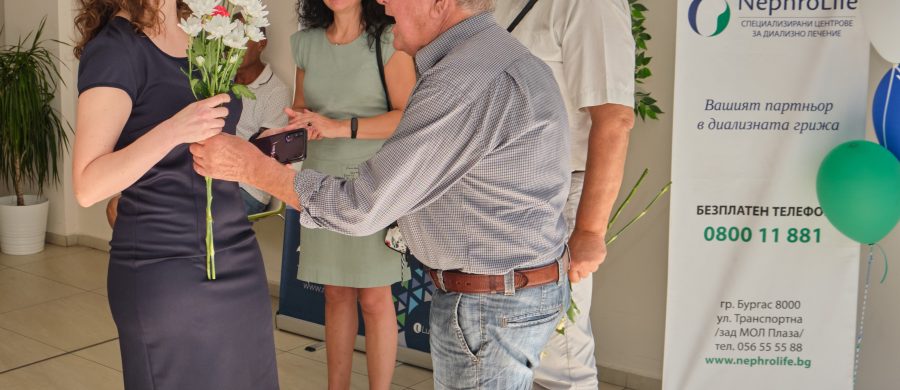
A campaign for the prevention and treatment of nephrological diseases started in Burgas from today and will continue until the end of the year, NephroLife reported.

The occasion is the 4th birthday of the dialysis center.

Free examinations will take place after a pre-booked appointment on 056/ 555 588.

The goal is people from Burgas region to have access to high-quality health care in the field of nephrology. Another news is that the nephrologist – Dr. Boryana Ivanova* – is part of the health facility team.

During the celebratory cocktail, she presented to the attendees her future plans in the field of dialysis treatment, the development of the center and the enrichment of the offered services – the launch of peritoneal dialysis and some clinical aspects in nephrology. A series of meetings and training seminars on vascular access support, diet in dialysis and pre-dialysis stages, emphasis on diabetic kidney disease, etc. are planned to take place in the center.

We remind you that the dialysis center, located in the Burgas “Izgrev” complex, is the first in Bulgaria to introduce the good practices applied in Israel – one of the centers for quality specialized treatment and innovations in the world. Over the years of its existence, NephroLife has proven itself to patients at home and abroad as a first-class and reliable choice for hemodialysis treatment. The clinic is behind a number of socially engaged campaigns aimed at people with chronic kidney diseases. In addition to the fact that the center is equipped with high-end equipment, the most important thing that patients encounter here is a team of doctors and nurses with a personal, friendly attitude and an individual approach – covering the entire path of follow-up – from prevention as a primary and important step to the very dialysis treatment.

* About Dr. Boryana Ivanova: She graduated  MU-Varna in 2017. From the following year, she was appointed as an assistant at the medical university. Directly participates in the educational process of Bulgarian- and English-speaking medical students. Participates in scientific congresses focused on nephrology and dialysis. She is a member of the Bulgarian Medical Union and the Bulgarian Society of Nephrology. Author and co-author of scientific articles in Bulgarian scientific journals.

Д-Р БОРЯНА ИВАНОВА

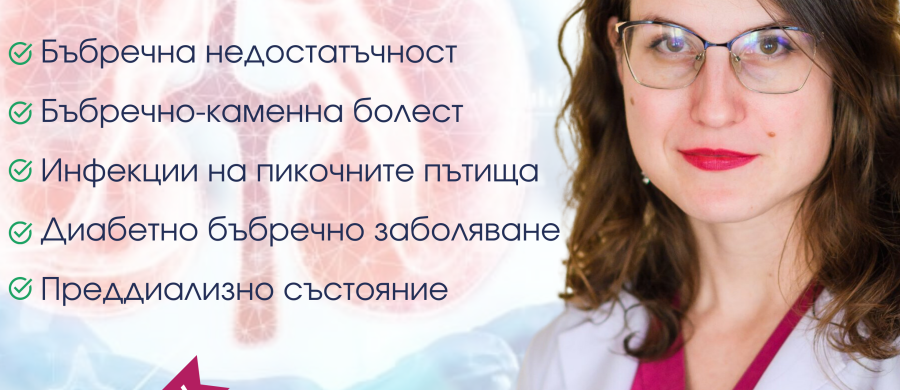
DR. BORYANA IVANOVA – NEPHROLOGIST – PART OF THE NEPHROLIFE TEAM

Dear friends,
We present to you the newest addition to our team – Dr. Boryana Ivanova – nephrologist.
She is part of our dialysis unit and will also perform examinations and consultations for all types of kidney diseases.
  • diagnosis and treatment of urinary tract infections
  • acute and chronic renal failure
  • kidney stone disease
  • diabetic kidney disease
  • primary and secondary glomerulopathies
  • hemodialysis/hemodiafiltration
  • emergency vascular access for hemodialysis and peritoneal dialysis.
She graduated from MU-Varna in 2017, specialized in Nephrology at UMBAL “St. Marina” Varna, and the specialty itself acquired in 2022. In 2018, she was a part-time assistant at MU-Varna, as the period from October 2022 to July 2023 she was a full-time assistant.
Directly participates in the educational process of Bulgarian- and English-speaking medical students.
Dr. Boryana Ivanova participates in scientific congresses focused on Nephrology and Dialysis. Member of the Bulgarian Medical Union and the Bulgarian Society of Nephrology. Author and co-author of scientific articles in Bulgarian scientific journals
Areas of interest:
  • Main areas of interest are the prevention,
  • diagnosis and treatment of primary glomerulonephritis,
  • diabetic nephropathy,
  • lupus nephropathy,
  • vasculitis,
  • metabolic nephropathy,
  • acute and chronic pyelonephritis,
  • autosomal dominant polycystic kidney disease,
  • renal failure,
  • kidney stone disease.
  • Additional areas of interest: COVID-associated kidney diseases, Marseille fever with renal involvement, hemorrhagic fever with renal syndrome, UMOD nephropathy, peritoneal dialysis.
СЪДОВ ДОСТЪП

VASCULAR ACCESS – FISTULA OR CATHETER – HOW TO CHOOSE?

When it comes time to start hemodialysis, among many other questions, the question of vascular access – AVF or PermCat (or more simply fistula or catheter) invariably arises.

In this article, we will try to look at this choice from all sides in order to give patients the most general idea and to facilitate their choice as much as it is possible to talk about it.

Fistula (AVF): Let’s start with the fistula, because of the two options, building a dialysis fistula is definitely the better option.

The fistula is easier to handle, maintain, less affects the daily routine, way and quality of life of the patients.

It is also much less risky in terms of future infections.

What exactly is an arm fistula?

Here we will try to avoid medical language and explain in an easily accessible way what a fistula in general is a “splicing, fusion” of a vein and an artery of the arm, which is a medical manipulation under anesthesia.

A small incision is made around the wrist or a little higher up the patient’s arm, depending on the doctor’s judgment – this is the so-called “high” (around the bend of the elbow) or “low” (around the wrist) fistula, the vein and

the artery is “merged”, then they are sutured and a certain period is waited for the fistula to heal and work. This may take a month, even two, and it may not work at all – these are precisely the risks of fistula. As for the location – whether the fistula is high or low, it is better if it is low – next to the wrist. The reason for this lies in the fact that if something happens to this fistula and it stops functioning, it can then “walk” up the arm and make a new one. Unfortunately, doctors rarely decide to make low fistulas, perhaps due to the fact that the vessels are much better expressed in the upper part of the arm, accordingly, it is easier to work there and the chances of success are greater.

Fistula positives:

– reduced risk of infections to a minimum

– preserved quality of life and routine

– you can swim, do any kind of work, without, of course, heavy physical work and strain.

Maintenance of daily hygiene occurs without change – as it was before the onset of the disease.

– among the positives, it is important to mention that what worries the patients, namely – pricking with fistula needles for each dialysis – will be painful – no!

The place loses its sensitivity and no pain is felt when it is turned on.

Of course, there is a moment of discomfort, but it is by no means an extremely painful manipulation.

Disadvantages of fistula:

– Time.

Each fistula takes time to develop and become usable, sometimes over two months.

There is a risk that it will never develop, ie. to remain unusable. This is one of the main concerns of hemodialysis patients – how will I continue my treatment if my fistula doesn’t work?

Fistula is not an option for patients who have high values and need to be put on dialysis quickly or urgently.

But, being the best option for vascular access in general, our advice to such patients is to get a catheter but at the same time seek advice from their dialysis center to refer them to a good vascular surgeon to do the fistula. In this way, the necessary dialysis treatment will be started through the catheter, but it will be thought in the perspective of building a good fistula to be used for the patient’s hemodialysis needs in the future.

– another common negative is the sudden stoppage of the fistula.

The reasons for this could be many and varied, but often the culprit is again high blood pressure, left unchecked – it causes the vessels to constrict and the fistula to spontaneously close.

Such an unexpected event puts the patient in an extremely unpleasant, stressful situation where suddenly, without warning, he finds himself with absolutely no vascular access through which to perform dialysis.

In such a case, of course, a temporary / permanent catheter is immediately placed and a new option for fistula construction is sought again. – “Why do they advise me not to make a fistula, but to go directly for a catheter?” – here is an extremely common question from patients. Usually the explanation from doctors is that the patient’s vessels are not good, he is too old, or he has diabetes.. This is not the case. Anyone could get a nice, quality, working fistula.

The trick is to find a good enough specialist to do it for him. We return to infections again to mention how risky they are for hemodialysis patients. When the treatment, the medical staff at the dialysis center are up to standard and professional, patients with fistulas can be absolutely calm that they are not vulnerable to infections introduced into their body.

TYPES OF VASCULAR ACCESS – AV FISTULA

Синдром на Алпорт

ALPROT SYNDROME – MAIN CHARACTERISTICS

Alport syndrome is an inherited renal condition that damages kidney tissue and glomeruli and leads to kidney failure.

Its name comes from the scientist Arthur Cecil Allport, who at the beginning of the last century first described what was shown, defining it as “hereditary, familial, congenital hemorrhagic nephritis”.

What is the cause of Alport syndrome?

The disease is genetic, which also explains the heredity in patients.

At a certain stage of the development of the embryos, a gene mutation occurs, which leads to changes in the kidney membranes (glomeruli, Bowman’s capsule) and, accordingly, the manifestation of what is shown at a later stage.

There are 3 types of inheritance according to the type of mutation:

1. The X-linked mutation. It is also the most common manifestation of the mutation in which Alport syndrome occurs.

In this case, the disease is transmitted from the mother to the son, but not from the father to the son, since the defect occurs on the X chromosome.

2. Autosomal recessive form It is observed at approx. 15% of cases of patients with Alport syndrome

3. Autosomal dominant form A relatively small number of patients with Alport syndrome have this mutation – only approx. 5%.

These patients manifest the symptoms shown significantly later and better.

How do we know?

Clinical picture: The first symptoms (especially with the Encounter mutation) appear in early childhood, approx. 3 years of age, but there are cases of even earlier manifestation of the syndrome – in infancy from several months to a year).

They include:

– hematuria (blood in the urine) that occurs spontaneously and has no other cause

– proteinuria (loss of protein through the kidneys, excreted in the urine)

– increased serum creatinine and arterial pressure – the increase in these parameters occurs in a slightly later stage of the disease.

– deafness – manifested in early childhood, parallel to the first manifestation of the symptom, often leads to mental retardation and is irreversible, due to damage to the auditory nerve.

– eye changes in the cornea and lens of approx The diagnosis is made by biopsy methods

– kidney, skin biopsy, as well as a genetic test to prove the format and type of Alport syndrome.

Treatment: Unfortunately, there is no cure.

Possible approaches aim to maximize the progress of the disease, as well as kidney transplantation, a stage for hemodialysis has been reached. The good news is that transplant patient syndrome can’t happen again to Alport.


БОЛЕСТ НА ФАБРИ

FABRY DISEASE AND HEREDITARY KIDNEY DISORDERS

Today we will focus on Fabry disease – a rare genetic disease resulting from a mutation of a gene (GLA) located on the X chromosome.

Like any part of the human body, the kidneys often suffer from various diseases. Some of them which arise spontaneously, are treated and subside quickly. Others are hereditary, appear quietly, inflict their damage, and when the patient feels them, it is already too late – the damage is irreparable – the kidneys do not function and it is necessary to start hemodialysis.

That is why it is important to know the family history – many of the kidney diseases are genetic and determine as the family burden in the family. In these cases, prevention and regular prophylaxis is of paramount importance – even if they cannot always be avoided, hereditary kidney diseases could be caught in time and successfully controlled.

The condition affects people of all ethnic and cultural backgrounds. It mostly affects men (1 in 40,000 men), but women can also be affected by Fabry disease. The reason for this is that women have two X chromosomes, and if one of them is defective, the other manages to somewhat compensate for the defect.

For men, however, this is impossible.

Their symptoms are observed already in the first 10 years of life. Boys complain of reduced physical ability. They get tired more easily and have a harder time tolerating cold and heat because the blood vessels are affected. If the mother observes her son, she will notice that in the group of playing children he gets tired the fastest and goes to rest, hides from the sun or the cold. These are the first things that make an impression on mothers, but sometimes they are interpreted as a whim. Then the pain appears in the limbs, most often the lower ones. There are also unexplained abdominal pains that last for hours or days. They are usually associated with a slight increase in temperature and then disappear spontaneously. Mothers do not always remember to talk about these symptoms because they do not attach much importance to them. Therefore, doctors who know the disease should purposefully ask about the symptoms. In case of doubt, a test is done – most often on urine. A small amount of protein may appear in it. One negative sample is not enough, several are made because the protein appears in periods.

As the symptoms progress, young men develop hypertension (high blood pressure) approx. 20 years of age. In the third-fourth decade, the first strokes appear. After that, more pronounced pains appear, the retina is colored in a specific way, viewed in polarized light. The intermediate products of the exchange due to the genetic defect (metabolites) are released like spokes on wheels. This can be determined by an ophthalmologist who has experience with such patients, however.

After 30 years, impaired kidney function is also established. It is leading in the clinical picture, therefore these patients are usually seen by nephrologists.

In women, the same symptoms occur, but with a 10-15 year delay.

Most visible to the human eye are changes in the skin. Specific rashes appear, which are located on the buttock and abdominal area around the navel and to the inguinal folds. They are so characteristic that if the doctor has seen them, he can diagnose another person on this basis alone. This rash does not hurt or itch, it has only a cosmetic effect. It can appear at the very beginning or later. It is not indicative of the severity of the disease, but if it is known, we can with almost 100% certainty go towards this diagnosis.

And in the next article we will pay attention on – Why Fabry disease should be detected and treated early?

Хемодиализа и Трансплантация

HEMODIALYSIS AND TRANSPLANTATION

Every patient who has started hemodialysis and after the initial emotional shock begins to hard and feverishly prepare for a kidney transplantation – the only possible way to “get his life back”.

Of course, it is very important to note that hemodialysis is often only a stopover for people with CKD on their way to being on the kidney transplantation waiting list, as well as the most important moment – the call that a donor situation has arisen and the patient with CKD is called in for a new organ transplant procedure.

However, how important is it to perform quality hemodialysis until the moment of transplantation?

We will dwell on this question in a little more detail…

Recently, Dr. Georgi Hristov, director of the Medical Oversight Executive Agency, stated that many of the potential kidney recipients who are on the waiting list are called for transplants, but, after tests, they are found to be in such deteriorated health state that they are declared unfit to receive a donor organ.

Perhaps this is also the reason why very few transplants are done in Bulgaria – less than 20 per year – one of the saddest statistics, which causes many people with CKD to become health emigrants.

But why is the level of hemodialysis in Bulgaria bad? The low price of the procedure, paid by the NHIF, the many services that are included under the umbrella of the dialysis procedure and that are not directly related to the healing process also detract from the amount that could otherwise be directed 100% to the essence of the procedure – many explanations , but one bottom line..

High-quality hemodialysis means one thing – a maximally preserved organism for the cherished moment of transplantation.

Good dialysis has several main pillars:

  1. Quality and especially NEW equipment of the highest class. We cannot help but mention the name of the leader in dialysis equipment – FRESENIUS. Every center equipped with new FRESENIUS devices is guaranteed to perform excellent dialysis.
  2. Consumables – once again FRESENIUS are on the front line – dialyzers from the brand, blood lines – grant the best possible and fine cleaning, maximally reduced blood loss, good physical condition after the procedure, etc.
  3. Medicines – when the patient is in the final phase of CKD, respectively undergoing dialysis treatment, his body does not produce the relevant substances and elements necessary to maintain good levels of hemoglobin, for normal levels of phosphorus, calcium, potassium, iron, etc. This requires many and expensive medications, which are part of the procedure, paid for by the NHIF, and are not at the patient’s expense.

However, many of the dialysis centers save on these drugs, at the expense of greater profit for the clinic.

Regular monthly examinations of patients, their physical condition are the best guarantee for the good work of the hemodialysis center.

This is the only way to control medication intake and maintain good levels of elements in the body.

  1. Staff – an extremely important component in the dialysis structure is the staff, in the form of experienced nurses and a doctor who does NOT leave the dialysis room for a single moment. In dialysis, the worst can happen in a minute – lines are severed, a catheter is pulled out, while the patient’s blood is literally outside their body as the machine filters it – these are just examples of extremely critical and potentially deadly situations. Which can only be mastered by an experienced nurse with a doctor by his side.

Contrary to the initial impression – everything happens extremely dynamically in dialysis, and only the experienced hands of the nurses can prevent it from ending tragically.

These are just a few points of support on the path of each patient’s choice to protect his right to the best treatment he deserves.

A good diet, strict control over fluid intake, regular monitoring by all kinds of specialists, especially a cardiologist, endocrinologist, pulmonologist, etc. pave the way for transplantation, which is the normal and logical conclusion of the problem called “end-stage CKD”.

STAGES OF CHRONIC KIDNEY DISEASE

ПСИХОЛОГИЧЕСКИ СЪТРЕСЕНИЯ, СТРЕС И ТРЕВОЖНОСТ ПРИ ПАЦИЕНТИТЕ НА ХЕМОДИАЛИЗА

STRESS AND ANXIETY IN HEMODIALYSIS PATIENTS

It is an indisputable fact that the news of starting hemodialysis, which patients with chronic renal failure (CKD) receive, is an extremely traumatic psychological moment – where starts suffering not only the body, but also the soul of the patient.

Dialysis treatment that continues for years, and the fact that the patient is dependent on the specialized equipment – the dialysis machine, on the observance of a strictly defined dietary regime, significantly limit the personal freedom of the patient, his social contacts, and seriously disturb his professional realization.

As a result, the patient experiences stress and anxiety, which have an adverse effect on the entire healing process, adaptation, emotions and quality of life.

Is hemodialysis treatment so scary and hopeless?

The short answer is: NO.

Here’s the longer one:

Hemodialysis treatment is now years away from what it was in the 90s – the equipment in private dialysis centers is at an excellent level, and in most municipal hospitals the old dialysis machines with hundreds of thousands of hours of service have already been replaced with new ones.

Competition between medical facilities raises the level of service for patients, and brand new Fresenius machines and consumables can now be seen more and more, which contributes to the excellent cleansing of toxins from the patient’s body.

The procedures, in turn, are tolerated by the patient much better, there are no constant vomiting, headaches during dialysis caused by low-quality and repeatedly used consumables, “disinfected” in formalin solution, there is no shortage of drugs to maintain a good level of hemoglobin, iron, calcium, phosphorus no longer “flys in the sky”. Hepatitis epidemics have not occurred for decades.

The many dialysis facilities scattered in the cities allow all patients not to be “tied to the machine”, but to be able to travel, if they wish, to go to the sea or on holiday abroad.

Most patients of working age continue with their employment.

Dialysis patients at a younger age, and not only that, have an excellent chance and opportunity for transplantation – again thanks to the quality dialysis they perform, which preserves the body as much as possible and gives it the necessary time until the cherished moment of transplantation, the chance also increases for the new authority to be accepted.

Cases of patients of childbearing age who, after a successful transplant, become mothers and continue their lives to the fullest are no longer rare.

Of course, for a job between two people to be done successfully and well, both must participate equally. Efforts are also needed on the part of the patients.

A good diet, strict adherence to dietary restrictions, no matter how unpleasant they may be at times, is a necessary part of the process.

Regular control of blood pressure, timely help from various specialists (cardiologist, endocrinologist, etc.), when necessary, are the best helper for the patient with CKD.

Last, but not least, is the choice of a dialysis structure – it is most important that the patient chooses that place where there is a successful symbiosis between excellent, new equipment, excellent medical control carried out during the dialysis sessions – which means the doctor to be constant between his patients, because in dialysis “whites” happen in seconds. One of the most important people in the dialysis facility is the dialysis nurses – they literally hold the patients’ lives in their hands. When the dialysis nurse is experienced, she can “stab” even the most difficult fistula, can sense an approaching danger for the patient even before the doctor has thought about it, and prevent it.

Medicines are also an indispensable part of the treatment and help in the long term to maintain the good general condition of the body. Saving them, unfortunately, does not lead to anything good.

In conclusion, dialysis is a team game, a game of trust and professionalism.

And let’s not forget that there is always a chance!

BALANCING WORK AND DIALYSIS

БЕЗПЛАТЕН НЕФРОЛОГИЧЕН СКРИНИНГ

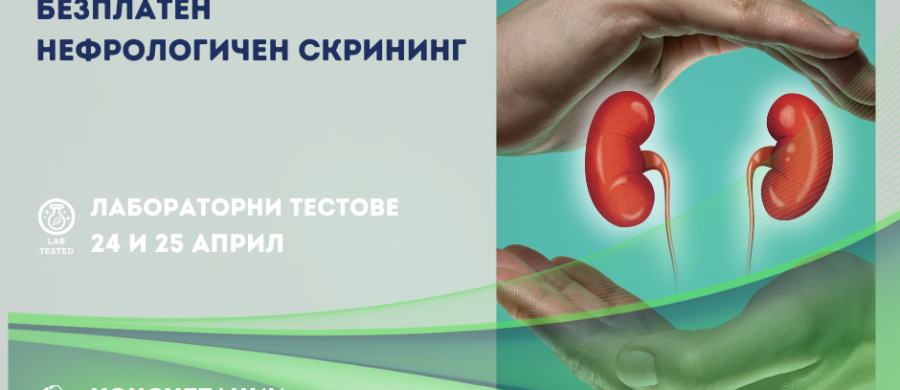
NEPROLIFE WITH FREE NEPHROLOGY SCREENING IN APRIL

The package will include routine tests of urine and blood indicators – urea and creatinine and subsequent free examinations by the nephrologist Dr. S.Stamova.

Due to the great interest, dialysis center NephroLife continues its collaboration with the well-known nephrologist Dr. S. Stamova.

The campaign which will take place in April is aimed to all patients with nephrological kidney diseases and chronic renal failure.

To request participation in the campaign, you can contact us at 056 / 555 588 and 0878 925 945, where you will receive additional information and guidelines for your registration.

Dates for laboratory tests – April 24 and 25, consultations with Dr. Stamova – April 26 (Wednesday).

The number of patients with chronic kidney diseases is growing annually worldwide, including in Bulgaria. According to the Bulgarian Nephrology Society, 13% of Bulgarian citizens suffer from kidney diseases. Screening in the first is the first step that leads to early detection and more successful follow-up therapy. Unfortunately, a large percentage of patients do not have clinical indications in the early stages of CKD, when the disease process can be most effectively affected. Therefore, regular examinations and nephrological consultations are recommended, especially in risk groups – patients with arterial hypertension, diabetes and in cases of kidney disease in the family.

Бъбречна недостатъчност – как да разбера?

KIDNEY FAILURE – WHAT SHOULD I KNOW AT THE BEGINNING?

Let’s start from the beginning – what is the function of the kidneys?

And the answer is – our kidney system is multi-component: kidneys are not just a filter, but also play an important role in:

– excretory function – through the kidneys – excess water, salts and nitrogen-containing substances, which are formed as a result of the exchange of substances in the body of each person, are excreted in the urine.

– maintenance of an optimal balance in the “internal environment” – this is the so-called “homeostasis” – In case of changes in the water-salt and acid-alkaline internal environment of the body, the kidneys include a number of compensatory mechanisms with which they restore this balance.

– stimulating the production of red blood cells (erythrocytes) – specific kidney cells produce the hormone “erythropoietin”, whose task is to stimulate the bone marrow to produce blood cells.

– maintenance of normal strength and structure of human bones – the kidneys are also actively involved in the production of vitamin D3, which is responsible for the strength of bones in the human body.

When do we start talking about chronic kidney failure (CKD)?

When these renal functions begin to decrease until they are completely lost (last stage of renal failure, when creatinine has already reached levels of approx. 850 µmol/l.

Sometimes, quite imperceptibly, the degree of kidney failure is reached, which necessitates frequent examination of the state of kidney function.

Of course, it takes time to reach the end stage of CKD, but eventually, the kidneys are irreversibly damaged.

The first signs are a decrease in the amount of urine excreted – an important symptom, which, however, is not always manifested.

Sometimes the exact opposite symptom is present – excessive excretion of urine (polyuria). This happens when, in an attempt to excrete substances the body does not need, the damaged kidneys excrete more water because they cannot concentrate the urine.

Patients excrete up to 3 or more liters of urine per day, urges to urinate are frequent even at night!

  For comparison – a healthy person usually urinates within 1.5 l/24 hours.

  Other characteristic complaints are easy fatigue, high blood pressure that is not affected by medication, or at least not subject to normal regulation and control, nausea, nocturnal shortness of breath and difficulty breathing, which are due to pulmonary edema, drowsiness. Diabetes is also a ‘first aid in the development of CKD’

That is why prevention and regular monitoring of kidney health by a nephrologist is so important.

If you have any of the symptoms described above, accompanied by frequent urinary infections, kidney pain, if you have been suffering from diabetes for several years – contact a nephrologist who will prescribe preventive tests, including creatinine and urea, and consult you subsequently.

CHRONIC KIDNEY FAILURE AND CARDIOVASCULAR DISEASES

BACK