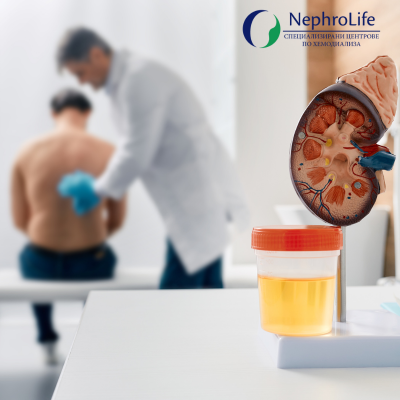








Chronic Kidney Disease (CKD) versus Acute Kidney Injury (AKI)
The kidneys play a crucial role in maintaining internal homeostasis—they filter the blood, remove waste products, and regulate electrolytes, blood pressure, and fluid balance. Impairments in kidney function can be acute or chronic, and these two conditions differ significantly in onset, course, and prognosis.
Acute Kidney Injury (AKI)
Definition
Acute kidney injury is a sudden and rapid decline in kidney function, developing over hours to days.
Main causes
-
Reduced renal blood flow (dehydration, blood loss, shock)
-
Toxic substances and medications (NSAIDs, contrast agents, antibiotics)
-
Infections and sepsis
-
Urinary tract obstruction (kidney stones, tumors, prostatic hyperplasia)
Clinical manifestations
-
Decreased urine output (oliguria) or absence of urine (anuria)
-
Edema
-
Elevated serum creatinine and urea levels
-
Nausea, vomiting, confusion in severe cases
Prognosis
AKI is often reversible if the underlying cause is identified and treated promptly.
Chronic Kidney Disease (CKD)
Definition
Chronic kidney disease is a progressive and irreversible loss of kidney function lasting more than 3 months.
Main causes
-
Diabetes mellitus (leading cause)
-
Arterial hypertension
-
Chronic glomerulonephritis
-
Hereditary diseases (e.g., polycystic kidney disease)
-
Long-term use of nephrotoxic medications
Clinical manifestations
-
Often asymptomatic in early stages
-
Fatigue and weakness
-
Edema
-
Anemia
-
Disorders of calcium–phosphate metabolism
-
In advanced stages – uremic symptoms
Prognosis
CKD is irreversible, but its progression can be slowed with appropriate treatment and control of risk factors. In end-stage disease, dialysis or kidney transplantation is required.
TYPES OF ACUTE KIDNEY INJURY ACCORDING TO THE MANNER OF ORIGIN